Building Climate-Resilient Landscapes, Food Systems and Livelihoods
Climate change is transforming the way food is produced, distributed, and consumed. At Miramar International Foundation (MIF), we design and implement innovative climate adaptation solutions that enable communities, institutions, governments, and private sector partners to build resilient food systems capable of thriving under increasingly unpredictable climatic conditions. Our integrated approach combines climate-smart agriculture, protected cultivation technologies, resilient seed systems, ecosystem restoration, water-efficient production, and nature-based solutions to increase productivity while conserving natural resources.
Working across Kenya, Ethiopia, and the wider East African region, MIF has successfully implemented climate-resilient agricultural systems in arid and semi-arid lands (ASALs), refugee settings, urban informal settlements, schools, and rural farming communities, demonstrating that innovation can transform even the most climate-constrained environments into productive and sustainable food systems.
1. Climate-Smart Agriculture & Protected Production Systems
MIF promotes climate-smart production technologies that maximize productivity while reducing dependence on rainfall, improving water-use efficiency, and strengthening resilience against climate variability. Our protected agriculture systems enable year-round production in environments where conventional farming is increasingly challenged by drought, land degradation, and changing weather patterns.
Areas of Focus
- • Climate-smart agriculture
- • Hydroponic production systems
- • Greenhouse technologies
- • Protected agriculture
- • Water-efficient irrigation systems
- • Drip irrigation
- • Climate-resilient horticulture
- • Precision agriculture
- • Controlled environment agriculture
2. Hydroponics, Aquaponics & Integrated Food Production Systems
MIF is a regional leader in designing and implementing innovative soilless farming systems that improve food production while using significantly less water than conventional agriculture. Our integrated hydroponic and aquaponic systems combine vegetable production with sustainable aquaculture, creating circular food production models suitable for schools, refugee settlements, urban communities, and commercial enterprises.
These technologies have been successfully implemented in Kenya and Ethiopia, including humanitarian settings where water scarcity, limited land, and climate variability present significant challenges to food production.
Areas of Focus
- • Commercial hydroponics
- • School hydroponic systems
- • Urban and peri-urban agriculture
- • Aquaponics
- • Integrated fish and vegetable production
- • Water-efficient food systems
- • Circular food production models
- • Nutrition-sensitive agriculture
3. Azolla-Based Climate-Smart Production Systems
Harnessing Nature for Sustainable Food, Feed and Climate Resilience
MIF promotes the cultivation and utilization of Azolla, a fast-growing aquatic fern, as an innovative climate-smart solution that enhances sustainable agriculture while reducing production costs and environmental impacts. Through integrated farming systems, Azolla provides a highly nutritious, protein-rich feed for fish, poultry, dairy cattle, pigs, rabbits, and other livestock, while also serving as a natural biofertilizer and soil conditioner. Its rapid growth, low water requirements, and ability to fix atmospheric nitrogen make it an ideal technology for climate adaptation, particularly in water-scarce environments and resource-constrained communities.
Integrated with hydroponics, aquaponics, Black Soldier Fly production, livestock systems, and regenerative agriculture, Azolla contributes to circular bioeconomy models that improve food security, reduce dependence on imported feed ingredients, lower greenhouse gas emissions, and strengthen the resilience of smallholder farming systems.
Areas of Focus
- • Azolla production systems
- • Climate-smart livestock feeding
- • Sustainable aquaculture nutrition
- • Integrated fish–Azolla farming
- • Biofertilizer production
- • Circular farming systems
- • Low-carbon agricultural technologies
- • Sustainable feed innovations
4. Climate-Resilient Seed Systems & Planting Materials
Access to quality planting material is fundamental to climate adaptation. MIF strengthens resilient seed systems through advanced propagation technologies, community seed enterprises, and quality assurance systems that improve farmer access to high-performing planting materials.
Our work includes modern propagation technologies such as tissue culture and aeroponics, alongside indigenous tree propagation, community nurseries, and agroforestry systems that strengthen long-term resilience.
Areas of Focus
- • Tissue culture technologies
- • Aeroponic potato seed production
- • Certified potato seed multiplication
- • Community seed enterprises
- • Community nurseries
- • Vegetable seed systems
- • Indigenous tree seed systems
- • Agroforestry planting materials
- • Seed quality assurance
- • Seed certification support
- • Seed security
5. Nature-Based Solutions & Landscape Restoration
Healthy ecosystems are essential for resilient communities. MIF works with governments and communities to restore degraded landscapes through integrated ecosystem restoration, agroforestry, watershed management, biodiversity conservation, and community forestry initiatives that improve livelihoods while strengthening climate resilience.
Areas of Focus
- • Landscape restoration
- • Community forestry
- • Watershed restoration
- • Agroforestry
- • Biodiversity conservation
- • Carbon sequestration
- • Ecosystem restoration
- • Climate adaptation planning
6. Climate Finance & Green Investment
MIF develops investment-ready climate programmes that connect restoration, sustainable agriculture, and resilient livelihoods with climate finance and impact investment opportunities. We support governments, development partners, and private sector actors to unlock financing for nature-positive development while strengthening environmental stewardship and economic resilience.
Areas of Focus
- • Climate finance
- • Carbon finance
- • ESG integration
- • Green investment
- • Nature-positive enterprises
- • Carbon project development
- • Sustainable landscape financing
7. School Food Systems & Nutrition Resilience
Schools provide a unique platform for building resilient communities. MIF integrates climate-smart agriculture with school feeding programmes to improve nutrition, strengthen practical agricultural education, and increase local food production. Through hydroponic systems, kitchen gardens, and integrated food production models, schools become centres of learning, innovation, and community resilience.
Our work has demonstrated how climate-smart food production can support school nutrition programmes in informal settlements, refugee contexts, and resource-constrained communities while creating learning opportunities for young people.
Areas of Focus
- • School feeding programmes
- • School hydroponics
- • Nutrition-sensitive agriculture
- • School gardens
- • Climate education
- • Youth agricultural innovation
- • Food and nutrition security
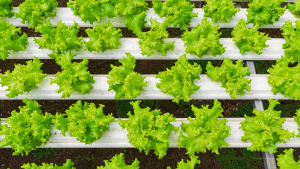
Explore the future of agriculture with MIF’s Hydroponics program.
By reimagining farming through soilless cultivation,
we’re driving sustainable solutions that maximize
crop yield and resource efficiency.

Discover MIF’s School Feeding Program, a transformative endeavor that goes beyond education by providing balanced and wholesome meals to schoolchildren.
By nourishing minds and bodies, we’re creating an environment where learning flourishes and communities thrive.
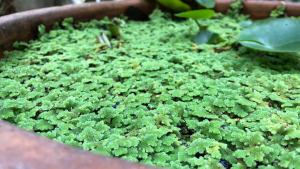
Embark on a journey of innovative farming with MIF’s Azolla Farming
program. By harnessing the power of aquatic ferns,
we’re empowering farmers to enhance livestock nutrition,
reduce feed costs, and promote sustainable agricultural practices.
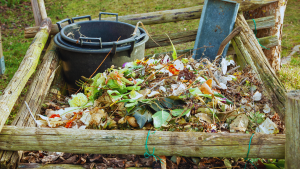
Embracing sustainability with MIF’s Organic Waste Management initiative.
By harnessing the natural power of Black Soldier Fly larvae,
we’re transforming organic waste into valuable
resources while minimizing environmental impact.